12.8.09

New Digs in the Northwest

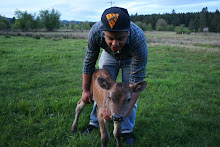
I have spent most of the summer relocating to and getting settled in Portland, OR. I am a native Northwesterner who has lived in Portland before, and I know the city well. But like all cities, this is an ever-changing cultural landscape. New restaurants have opened, the "it" neighborhoods of a few years ago have matured and new ones are popping up. I am excited about the possibilities for The Ethical Butcher here in Portland's dynamic food scene. With farms literally at its doorstep, the ocean an hour away and rivers everywhere, Portland naturally lends itself to uninhibited access to sustainable meats and seafood. I am exploring many avenues for getting involved here and already making headway in these first few weeks. Let me fill you in on some of what I'm working on...

  • I will once again be reviewing and listing restaurants and stores that serve or carry meat and fish from sustainable sources. These listings will not be limited to Portland however--Seattle, Tacoma, Olympia and points all over the Pacific Northwest will be included.

  • I recently found a commercial kitchen to begin curing my specialty bacon on a large scale. After navigating the maze of government inspections and licensing, I will finally be able to legally offer custom-curing of both lamb and pork bellies in late September. I had also hoped to sell my bacon at local farmer's markets, but have hit town too late in the season to apply. I will definitely be in markets around the area when the 2010 season begins, just follow the tell-tale smell of bacon cooking...

  • Speaking of my bacon, an update on The Bacon Gospel. Due to some issues with nailing down a supplier, I had to push back the dates a bit. Bacon for the Sound will begin next week and BCN for PDX will take place in September, using some very special local pork. Next March I will be in Austin for SXSW 2010. The Bacon Gospel will look a little different, though. From March 17-21 I will be slinging the most mind-blowing, palate-pleasing BLT's known to man. I've still got one hitch to realizing this vision, though. Due to Texas law, I must set up my stand on private property. If you live, or have lived in Austin, or know anyone who does, I would greatly appreciate leads on businesses in the vicinity of the festival to approach about using their sidewalk. A location on W 6th would be optimal, but I'll take what I can get. I am pretty confident the word will spread...I mean, it is the Gospel, after all.

  • On to one of the most exciting things I've got coming up. I have been developing a pretty fortunate relationship with local farmers who raise one of the rarest breeds of pig in the world, the Red Wattle. Their numbers are so low (around 2000 worldwide) that most of the animals are currently only being used for breeding to get the population to healthy levels. But this is why I used the word "fortunate". I will be using or eating Red Wattle not once, not twice but three times in the next couple of months! I hinted at the special pork I'd be using for BCN for PDX, and Red Wattle is it! Once called the "bacon pig", this pig puts on a superior fat-to-meat ratio. It is an honor to be able to use it for The Bacon Gospel!

  • I also secured a couple of suckling pigs of the same breed from a litter due later this month. I will use them for the first in a series of "farmer/eater meetups" (still thinking of a clever title) at local restaurants this fall and winter. People who attend this event will not only get to eat some of the best pork they've ever had, but meet the tireless farmers who are working so hard to bring heritage breeds back from the brink of extinction. I will do the same with local heritage lamb, goat, rabbit and poultry in the months to come. I am still looking for a location for these events, so if you have ideas, shoot me an email!

  • I must now selfishly admit that I am thrilled for this coming Labor Day weekend. After a slew of emails between myself and the farmers about using their pork for other projects, I was invited to help the farmers pit-roast a 100 lb hog! This is a butcher's and chef's dream! It will be my first time roasting a whole hog and I am beyond ecstatic about eating pork that very few people alive will ever have the occasion to, ON the farm they were raised. I assure you, there will be tons of pictures and and an in-depth interview with these heroes among farmers, butchers, chefs, and pigs. I will also soon write a more informational post about heritage breeds in general, and why it is so very important to buy heritage meats.

  • Lastly, I am working on the beginning stages of a business plan for opening my own shop. This will be a place where, as my name implies, one will be able to buy meat, fish and other animal products from only the most sustainable and trustworthy sources. I am even toying with the idea of offering humane slaughter and processing of chickens and rabbits for all those backyard farmers who are really ready to look their dinner in the face. What is more local than the animals you raise yourself in your own backyard? For many this is a step too far, but if you really think about it...it is a step in the right direction.

11.7.09

The Ethical Butcher still wants you!

CALL FOR SUBMISSIONS !!!

With the deadline fast approaching, I wanted to re-post this call. I have had several responses, but would love to hear from even more of you! If these guidelines apply to you or anyone you know, please don't hesitate to send me a submission. Ex-veggies are changing the meat scene for the better and we have a unique and very important story to tell!

I am interested in getting a wide range of opinions and experiences, so there are only a few guidelines:

* 500-2500 words
* You must have been vegetarian or vegan for at least 3 years. (Sorry, pesca-vegetarian doesn't count.)
* Send entries to theethicalbutcher@gmail.com; deadline is Sept 1st, 2009.

Questions:

* When and why did you become vegetarian/vegan? To piss off your parents? Impress a girl? Were you given a PETA pamphlet at a hardcore show?
* When and why did you start eating meat?
*
What is your relationship to the animals you eat?
*
How has this change in diet affected your lifestyle? After years of getting stuck with iceberg lettuce "salad" at restaurants while your omnivore friends ate happily beside you, after enduring those times when even the fries weren't safe (and not to mention the time spent exhaustively searching ingredient lists for whey protein and casein)…how have things changed for you since you made the decision to eat meat? how has this change in diet affected your lifestyle?
* Where do you live? How has your location affected your meat consumption?

*
Your favorite meat-centered recipe?

21.6.09

The Bacon Gospel : Bacon for Brooklyn III

I was convinced by a few people to do one more small cure while I am still in Brooklyn. I had some of those great sourced items I wrote about in The Bacon Gospel : Bacon for Brooklyn, just begging to be used. I began dreaming of curing with jasmine tea from China and honey from India back during the first big cure a few weeks back. So I just had to do a couple of slabs of Jasmine Tea & Lemon. I was so pleased with the flavors the tea infused the bacon with, which is great because I was crossing my fingers all week that floral bacon was a good idea (this is experimental curing, after all!). It was more than a good idea, it was absolutely one of my best flavors so far!

After his second request, I am now somewhat in awe of the palate of one of my oldest friends. Last month when he requested Horseradish-Lemon-Turmeric I remember giving him a doubtful look. Horseradish-cured bacon? However, it turned out to be a delicious, warm flavor combo. A fellow native of the Pacific Northwest, he this time asked for Honey & Pine, yes pine. Where would I find pine that I trusted for curing here in Brooklyn? Lucky for us both, I recently spent a long weekend in the Berkshires. There I found the freshest, most pine-y branches to bring back and use. I was very curious to find out what that slab would taste like. Sweet? Bitter? Neither actually. It turned out to be woodsy and meaty, and what I can only describe as refreshing, not a word often used in reference to bacon.

I did another Brandy-cured slab, this time combining Armagnac, Vermont maple syrup, black pepper, cinnamon and other spices. I really enjoy the way the sugars in the liquors I've used caramelize once cooked. The aromas are beyond enticing. I want to do many, many more flavors featuring liquor of different types. Tequila bacon is a distinct possibility in the near future.

The last flavor is Chinese 5-Spice. The aromas are pretty crazy on this one, too. This is one I've done a few times before and is my girlfriend's favorite. 5-Spice is a combination of pork's best spice friends and Sichuan peppers, special little peppercorn husks, that add a completely unique fruity heat.

*Brandy & Maple
*Jasmine Tea & Lemon
* Honey & Pine
* Chinese 5-Spice

All told, I cured over 40 lbs of bacon in 14 flavors during the Brooklyn leg of this project! At this rate I'll hit my goal of 100 flavors much sooner than anticipated!

16.6.09

The Bacon Gospel : Bacon for Brooklyn II

Sometimes you have a big idea that gets bigger and bigger, and then explodes in disappointment all over you. But sometimes you have a big idea that gets so big it takes on a life of it own, leaving you to simply work out the details. The Bacon Gospel has been one such an idea. All 16 slabs of bacon came out absolutely beautiful! I was a little nervous about some of the ingredients-- curing bacon in liquor, fruit and horseradish seemed like a bit of a risk, but they each had incredibly complex flavors and aromas, making me one proud charcutier. Now that this first segment of The Bacon Gospel is complete, I am even more excited for this project to continue.

What really surprised me was how much the curing process changed the flavors of the slabs in different ways. Some flavors that I thought would be intense, like horseradish and scotch bonnets, became soft and nuanced. Conversely, flavors that I was sure would be lost came shining through, the strawberries being the best example. Another unexpected effect from the berries was the deep red color of the meat. Because I cure without the use of nitrates/nitrites, the meat does not usually retain a pink color after curing. This is fine and doesn't effect the taste or quality of the bacon whatsoever. But the slabs made with blackberries and strawberries had such amazing color, even after cooking!

I took all 32 lbs in to work to slice them up and taste test with co-workers. The mixture of smells from the slabs of mole, berries, jerk, turmeric, rum and more was intoxicating, so much so that people were actually coming in from the street to find out what we were cooking! One participant even started a blog after tasting his 3 slabs, complete with photos and tasting notes! Check it out at culinaryempiricism.blogspot.com

Thanks to all who participated in The Bacon Gospel : Bacon for Brooklyn!

Up next...
Bacon for the Sound and BCN for PDX in August!! Start sending in your flavor requests now!!

29.5.09

The Bacon Gospel : Bacon for Brooklyn

The last several weeks I have begun work on a huge on-going project, The Bacon Gospel. The first installment--"Bacon for Brooklyn"--is currently underway. In this project, I am traveling to different cities, custom-curing bacon to order for a limited amount of people, using only heritage pork, local when possible. This project has become much more than I ever expected. In giving folks the option to request flavors, I have had the opportunity to collaborate with 13 people on 10 new flavors of bacon! I have also been asked to teach a restaurant staff how to make house-cured bacon.

One thing I really hadn't anticipated was the connection that people would have to both the individual ingredients as well as overall flavors. What did the two people from Massachusetts request? Maple. Maple and nothing else, naturally. My West Indian roommate? Jerk. My food writer friend wanted seasonal fruit and herbs. One person even gave me several personally-sourced items such as ground cacao from his family's plantation in Trinidad and nutmeg from Grenada. As I begin to traverse the continent, I look forward to writing and curing at least 100 flavors of bacon! Traveling from Brooklyn to Seattle and Montreal to Austin, I don't believe that number is the least bit unrealistic. I am looking at continuing this project indefinitely, so if you'd like The Ethical Butcher to come to a city near you, don't hesitate to contact me!

To get your mouth watering and palate scheming, here are the flavors from The Bacon Gospel: Bacon for Brooklyn--

*Jerk
*Lemon-Horseradish-Turmeric
*Maple
*Whiskey-Molasses-Chipotle
*Brandy-Blackberry-Mint
*Mole Poblano
*Rum-Maple-Nutmeg
*Watermelon-Basil
*Strawberry-Tarragon
*Pineapple-Black Pepper-Clove


Check back next week for photos and notes!

Good advice.

"There is but one season of the year when salmon should be served hot at a choice repast; that is in the spring and early summer, and even then it is too satisfying, not sufficiently delicate. The man who gives salmon during the winter, I care not what sauce he serves with it, does an injury to himself and his guests."
- Ward McAllister, 'Society As I Have Found It' (1890)


I want to share this quote from my fish supplier's newsletter, taken from an article explaining the opening of Spring salmon season. Almost 120 years later, this quote is even more applicable, and if everyone back in those days and more recently felt the same, we might not be in our current predicament. Only recently have people begun to re-grasp the concept of seasonality in fruits and vegetables. Realizing that one does not need to eat strawberries and asparagus in December is a pretty new concept to most people. The same is true for fish and meat. Wild fish have seasons, and demanding them out of season not only causes problems like overfishing and pollution from poorly-run fish farms, but the resulting product is inferior. Just as the flimsy, tasteless asparagus you find in Winter, (farmed or frozen) salmon in Winter can't hold a candle to the rich, delicious freshness of in-season wild salmon. Eating seasonally doesn't require you to go without or settle for less, it gives you an opportunity to experience the wide diversity of foods available to you year-round. It is the way people have eaten for all of human history, a time-tested and sustainable choice for your body, the animals and plants you eat, and the planet.

20.5.09

Hanger for Bronko


Today my 6-year-old Border Collie/Black Lab mix, Bronko, will eat big chunks of hanger steak for dinner. Yesterday he had a knuckle of beef--that's the knee-cap itself plus the collagen-rich cartilage, connective tissues, and bits of meat that are left of the Sirloin Tip. This is his favorite meal of the week. It usually takes him about 45 minutes of industrious gnawing and chewing to get down to the actual bone. Satiated, panting and on what I have dubbed his "Meat High", Bronko sits unaware of his fortunes.

I actually began feeding Bronko real food way back in my vegan days. I had always distrusted most pet food, but when I became vegan, I didn't want to support the industry at all. I couldn't have my dog benefiting from the worst of the worst industrial meat. Bronko is also highly allergic to most grains, a staple of almost all commercial dog food. He would get patches of dry, itchy, cracked skin that drove him nuts. Even with the most organic, holistic of pellet-form foods I could find, I felt I could provide him with a better diet. Really now, if nutritionally balanced, would you want to eat the same exact thing every single day of your life? It's like surviving on Ensure.

Until the last century or so, dogs ate whatever scraps they found, not pellets. They are omnivorous scavengers, and as such they should be eating all sorts of foods. This in mind, I began researching homemade dog food, learning what foods are never OK, what foods are and how to cook them, supplements, etc. I also found many ready-made fresh, raw foods in some of the nicer pet stores in my then home, Seattle. I first started with these, and found that he most enjoyed a raw ground turkey and veggie blend. Remember though, I was vegan, as in I-have-a-vegan-tattoo vegan. However, I didn't believe that my dog needed to be vegan. I just couldn't cope with the turkey part of the deal. I finally settled on eggs as his protein. Eggs I could handle as long as they were from the right find of farms. I found the ratio of dog's weight/eggs a day and bought a bunch of veggies and got on my way. Until I became a butcher and then began eating meat, I fed Bronko several eggs a day on top of a mix of cooked down or shredded veggies and sometimes rice. When I became a butcher, I saw all the meat scraps, pounds of it, that we threw out everyday. I began collecting and freezing them. I figured out Bronko really only likes beef, which works out because beef has the most waste. Nowadays he enjoys all sorts of beef scraps in place of the eggs, which are now a special treat every few weeks. There's always a good amount of garlic for the fleas and the veggies I change weekly. Sometimes he gets things like a bit of plain yogurt, nutritional yeast, or peanut butter. My buddy Bronko is the picture of health, according to his vet.

Reducing waste is an important part of the sustainability equation. Pet food isn't the only way to reduce your meat waste. Make stocks from bones and skin, don't just throw them out. The biggest culprit here is chicken. Buying whole chickens instead of chicken parts not only reduces waste, but is incredibly economical. You can get a whole chicken-that's 2 breasts, 2 wings, 2 legs, and 2 thighs plus the neck and back for the same price as 2-3 boneless tasteless skinless chicken breasts. You can also make beautiful, rich stocks from the bones and heads of fish. But better than that is to eat as much of your fish as possible. Most fish skins are completely edible and delicious once cooked and hold much of the essential fatty acids and minerals we want to gain from eating fish. The cheeks and head meat of many fish are really the best parts, delicacies. You can then still make a stock with the bones and scraps of your meal. What recession?

We'll be talking more about reducing the waste involved in meat consumption later...